

Image Source: Sergio Benitez
By: Rhea Malhotra
Edited By: Gia Bharadwaj
Within the last decade, the fashion industry has seen an enormous rise in discourse over the sustainability of the business model implemented by a wide range of firms. The “fast fashion” business model gained popularity in the 1990s, originally lauded for its ability to offer affordability and variety while rapidly cycling through collections to keep up with dynamic clothing trends. With increased activism and consumer awareness, the fast fashion model has begun to lose support in metropolitan areas across the world. In particular, consumers have overcome some degree of information asymmetry, and the industry now faces criticism for environmental damage, unethical labor practices and low-quality deliverables.
In response to the growing disapproval of this framework, a more sustainable “slow fashion” business model has emerged in the last few years as a corrective measure for the externalities imposed on society by fast fashion practices. In contrast to the traditional structure utilized by the industry, slow fashion brands emphasize long-lasting garments, artisanal and handmade craftsmanship as opposed to mass production, and fair wages for workers.
Despite the general agreement that a shift in production practices is pivotal for the survival of this industry, there are very real challenges associated with altering consumer values to align with this newer model. An archetype for metropolitan areas across the world, New York City — in spite of its progressive values and fashion-conscious culture — doesn’t find itself in a position to equitably implement sustainability in clothing consumption patterns. This article will analyze three potential barriers that NYC residents would face in their choice to consume slow fashion products: (1) the high costs of slow fashion and income disparities across the boroughs, (2) consumer habits and a fashionable social culture and (3) government aversion to policy surrounding “greenwashing.” Rather than prescribing change, it will simply assess the current situation and the implications of a shift to slow fashion for residents across NYC who are purchasing clothing.
One of the key factors contributing to the branding of slow fashion as a sustainable alternative to fast fashion is its aversion to the cost-cutting strategies undertaken by major players in the industry as a whole. Fashion companies with unsustainable practices, such as Zara or H&M, have come under fire for their exploitative labor practices, which have compromised the livelihoods of garment workers across the developing world. In countries such as India, Bangladesh and China, outsourced workers in factories receive unfair wages, are susceptible to negative health outcomes and can even be barred from forming labor unions to fight against the violation of their rights. In addition, the utilization of mass production has considerably damaged the environment, with the fast fashion industry being responsible for 10% of global CO2 emissions.
In contrast, the slow fashion movement prides itself on its ability to produce garments without imposing externalities on stakeholders or engaging in mass production. However, the willingness of these newer brands to incur higher costs means that many sustainably-produced garments can fall into a significantly higher price range than that of fast fashion products. For example, a women’s t-shirt from H&M appears to cost around $10, while a similar product from Patagonia has a price tag closer to $50.
Income data for residents across New York City reveals striking disparities between boroughs. In a 2022 dataset published by the NYU Furman Center, ten out of 59 neighborhoods shown had at least 25% of households earning less than $20,000 in annual income, of which nine are in the Bronx (the only exception being East Harlem in Manhattan). In addition, the 2024 median household income reported in the Bronx was just $46,040, a number that is only continuing to decline. In certain neighborhoods such as the Financial District, Greenwich Village or the Upper East side — all of which have concentrations of at least 30% of households making over $250,000/year — the long-term investment associated with higher prices can be considered fairly reasonable. Overall, a quarter of NYC families find themselves unable to afford essential items such as housing, food and healthcare. For a family in the Bronx that lives paycheck to paycheck, with an income falling below the federal poverty line, it simply isn’t feasible to spend their limited disposable income on clothing.
There is no denial of the importance of environmental and ethical sustainability in any industry, particularly in fashion. However, it can be considered a privilege for many consumers to keep this concern at the forefront of their reasoning regarding purchasing decisions. In New York City, the cost of living is significantly higher than other cities and is rising at a rate faster than that of earnings. When the family income of 58% of New Yorkers falls over 200% below the poverty line, spending priorities will ultimately shift in favor of allocating disposable income to fund basic needs. This doesn’t necessarily suggest that New Yorkers are indifferent to social responsibility within this industry; many residents simply do not possess the means to contribute in a manner that is financially feasible for their current living situations.
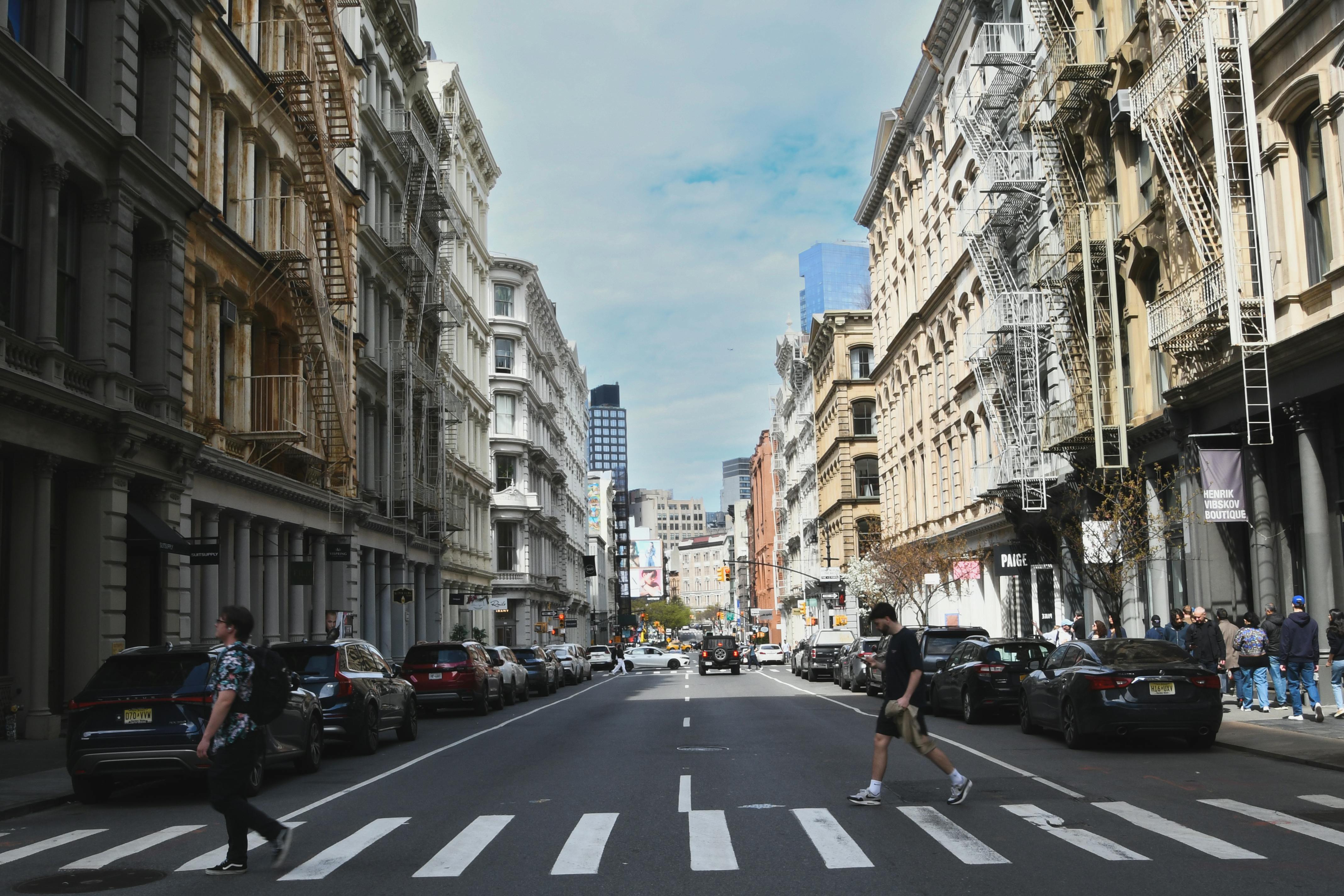
On a social level, there’s no doubt that New York City is an inherently fashionable place. Pick any street in Manhattan or Brooklyn and you’ll likely find at least a handful of people who are dressed their best. In reality, many of the trends you see here rely on the fast fashion business model to operate. The framework of fast fashion can accommodate rapidly changing consumer preferences, keeping up with demand almost exactly as trends change. As a result of these firms’ ability to mass produce, product variety is vast, serving as a partial explanation for why New Yorkers are able to see unique garments on almost a daily basis.
On a social level, does the pressure of New York’s fashion culture draw people away from slow fashion, a business model which by nature isn’t able to generate nearly as much variety as fast fashion? To gain better understanding on this topic, I interviewed Cindy Zheng, a freshman at NYU who shops for clothing on a weekly basis.
Q: “Would you say sustainability is something you consider when shopping for clothing?”
A: “Not really. I definitely consider how long the clothing will last but if I’m being honest, my immediate thoughts when shopping normally don’t concern the larger impact on the environment or society.”
Q: “What is your perception of the social culture surrounding fashion in NYC? Do you feel that there’s an implicit “pressure” to dress well?
A: “I would say it depends on where in the city you are. In nicer neighborhoods like UES, you definitely get the sense that people feel like they should dress well and keep up with trends, but in other areas like LES, the vibe surrounding fashion is more relaxed.”
Q: “Do you feel there is a certain ‘ease of access’ with fast fashion brands vs. slow fashion ones? Does this come in the form of price? Digital/physical accessibility? Something else?
A: “In terms of physical accessibility, it’s much easier to access fast fashion brands in the city. And these firms are able to throw together new designs extremely rapidly. Every time I walk by Zara on 34th Street, they have something new in the display cases which clearly entices consumers to walk in. Since NYC has dozens of physical clothing stores on every corner, which are mostly fast fashion brands, it becomes so much easier for residents to access these brands. So even if there is digital accessibility of slow fashion, you simply can’t ignore what you see on a daily basis just walking through Manhattan.”
Clearly, the built environment of NYC creates a culture that upholds the regular consumption of fast fashion. The argument can be made that the “exclusivity” projected by slow fashion’s less extensive garment variety may appeal to some. However, for an average New Yorker like Zheng (who has been a resident of both Brooklyn and Manhattan), sustainability tends to take a backseat as consumers still find themselves unable to resist the appeal of the trends supported by fast fashion brands.
Moving to the third barrier, much of the draw towards fast fashion is ultimately driven by marketing, and companies are in complete control of how they present their brand to consumers. In the context of sustainability, the last few years have seen an increase in the discussion of “greenwashing,” a phenomenon that has significantly promoted the platform of fast fashion firms in particular.
Greenwashing refers to the practice of using deceptive marketing strategies in order to conceal the environmental impacts of a firm’s production practices at various points in their supply chain. Corporate greenwashing as a whole went relatively unnoticed for a long period of time, but in recent years, consumer claims against this practice have made their way to courts around the country in an attempt to correct the inefficiencies that have been created by firms. For example, an investigation was opened against ExxonMobil by openDemocracy after the former failed to commit to its investment in a carbon capture and storage initiative proposed in 2021.
However, in the state of New York, attempts to shut down greenwashing in various industries have faced legal resistance. In January 2025, two cases surrounding consumer protection claims against large fossil fuel companies were dismissed by the New York Supreme Court. The court cited failure to provide (1) statements of how the products contributed to climate change and (2) evidence that misleading statements made by these firms actually persuaded consumers to purchase products. In essence, the state’s judicial branch exploited loopholes in the plaintiffs’ arguments, demonstrating blatant government indifference towards the environmental externalities imposed by these oligopolies.
Within the fashion industry specifically, New York consumers have condemned fast fashion firms for their lack of transparency regarding supply chain data (namely environmental impact, labor practices and animal welfare). As a result of this backlash, new legislation was introduced in the state; in 2022, the New York Fashion Act was drafted, with an aim to target all apparel and footwear companies in New York. The bill, if passed, would require disclosure of all supply chain information, the creation of tangible frameworks to remedy environmental damage and human rights violations and the management of chemical usage by companies.
Following its introduction, the bill garnered much support from sustainability advocates and legal officials in New York. Many believed that this would pave the way for both NYC and the state of New York to become global leaders in the advocacy for social responsibility within the fashion industry. Unfortunately, the act has since stalled in committee, with the last update of an amendment having been made in March 2025. While more time arguably must pass before sealing the fate of the bill, the resistance it is facing in the legislative branch reflects government avoidance of sustainable policy across industries.
But if consumers in New York are inherently aware of the impacts of greenwashing, then why wouldn’t they simply alter their consumption choices and boycott fast fashion brands? Frankly, as seen in the sections above, most consumers either don’t have the means or the awareness to act intentionally with respect to purchasing decisions. Regarding those for whom affordability isn’t a concern, the lack of government action against greenwashing results in the perpetuation of deception by fast fashion retailers. Even if brands come under fire by a select few activists, there are no barriers that prevent them from concealing the magnitude of the damage inflicted on various stakeholders. And why wouldn’t they? When greenwashing facilitates increased profit, happy consumers and protection from policymakers, there is simply no incentive for firms to engage in alterations.
With regard to the impact on consumers, the role of deceptive marketing in influencing purchasing decisions is heavily underestimated. If firms can convince consumers that they are taking steps towards implementing a more sustainable supply chain, then it provides them with the platform to engage in surface-level fixes without making significant changes. A notable example of this is the 2020 H&M Looop campaign; the company created a recycling system for customers to donate their old garments, the fabric from which would then be repurposed to create new articles of clothing. On the surface, the initiative promoted a sustainable practice, yet it simultaneously read as a tactic to distract consumers from the harm that is being done by the mass production of the majority of their other garments earlier on in the supply chain. Given the emphasis on the role of metropolitan areas in fighting against climate change, NYC residents are more likely to be made aware of sustainability initiatives; in addition, as established in the prior section of this article, New Yorkers also receive regular exposure to these brands on a daily basis, reducing the friction in purchasing their products. As a result, firms like H&M take away market share from brands that actually implement true circular economies, using deception of consumers to do so.
If the state of New York is able to pass legislation that supports increased supply chain transparency, it would apply pressure on fast fashion retailers to make deep-rooted changes to their production practices. Until that happens, New Yorkers (especially NYC residents) will remain stuck in a hidden information trap. Without any legal resistance to fight against greenwashing, these individuals remain oblivious to the magnitude of the damage being done by major industry players. The lesser the friction to purchasing unsustainable fashion is, the larger the barrier consumers face in exploring slow fashion options.
As a result of these barriers, the persistence of fast fashion consumption by New York residents will continue to inflict harm on garment workers, as well as the very environment that these consumers live in. Given the limited timeframe the world has to prevent irreversible climate damage (with a deadline of 2030 to reduce emissions by 45% and 2050 to reach net zero, according to the UN), the impact of all of these barriers has the potential to turn lethal. The points made in this article have already led to proposed solutions, but the real challenge begins when it comes to the implementation of these solutions. Until that point, it’s unclear the degree to which these brands are incentivized to self-regulate. Clearly, from the perspective of fast fashion firms, what the consumer doesn’t know won’t kill them. But could it eventually?


Leave a Reply