

Image Source: Nina R
By: Henry Gao
Edited By: Ishaan Batra
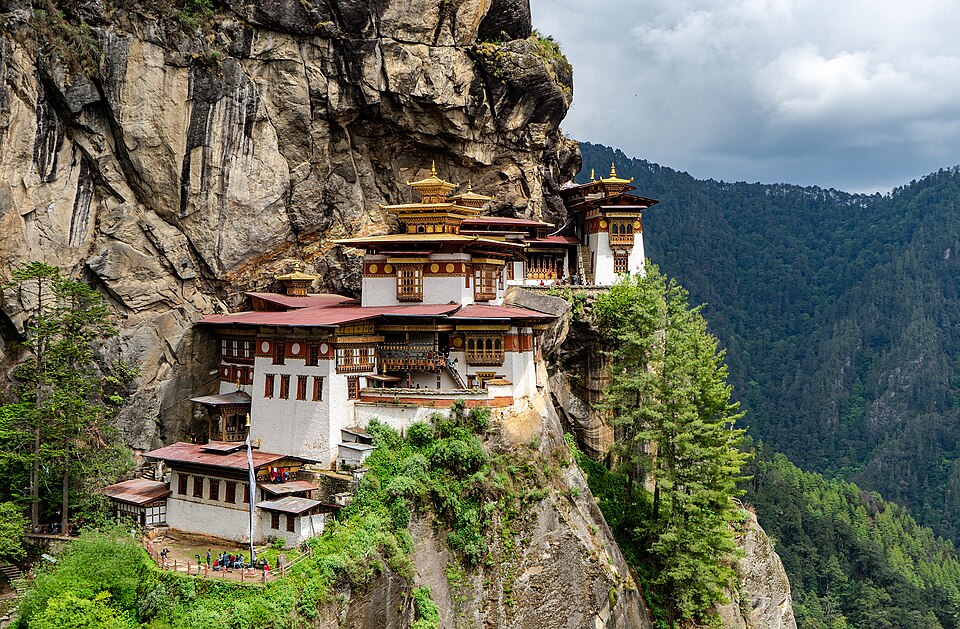
When most countries reopened after the pandemic, they rushed to rebuild visitor numbers. Bhutan did the opposite.
In September 2022, the Himalayan Kingdom reinstated a daily tourism levy of $200 per person, one of the highest entry fees in the world, at a moment when the global tourism industry was still fragile. Across both Asia and Europe, governments were competing to rebuild arrivals lost due to the COVID-19 pandemic. For example, countries such as Thailand expanded visa-free entry and promoted extended-stay incentives to attract digital influencers and long-term visitors alike. Similarly, Japan reopened steadily but paired it with aggressive marketing to revive inbound tourism. Meanwhile, Mediterranean economies such as Italy and Greece prioritized restoring flight connectivity and urban hotel occupancy after two seasons of near-empty streets. The dominant logic was clear: lower barriers, stimulate demand, recover revenue through scale. However, Bhutan rejected that playbook. Instead of chasing volume to compensate for the lost years, it chose to increase the marginal cost of entry. That decision is surprising not simply because the fee is high, but because it runs counter to standard recovery economics. In a downturn, most governments attempt to stimulate consumption; Bhutan constrains it. The move suggests that for Bhutan’s capital Thimphu, tourism is not primarily a cyclical revenue stream to be maximized after a shock, but a structural instrument to be controlled regardless of global conditions. In other words, Bhutan behaved less like a tourism-dependent economy scrambling for foreign exchange and more like a state determined to preserve long-term leverage over how and when demand enters its borders. Rather than boosting arrivals at any cost, this decision reaffirmed a long-standing philosophy: tourism should be limited and purposeful. For decades, Bhutan’s development strategy has been guided by “high value, low volume” tourism. Instead of maximizing headcounts, the goal has been to maximize economic and social returns per visitor while protecting culture, environment and national identity. When global travel slowed and demand faltered, the Bhutanese government adjusted its price strategy. It halved the Sustainable Development Fee (SDF) to $100 per day through August 2027 to attract more visitors while preserving its overarching model. But the underlying logic to use tourism as a tool of statecraft remains unchanged. Bhutan does not treat tourism as a conventional industry, but rather fiscal infrastructure.
Before the COVID-19 pandemic, Bhutan required most international travelers to purchase a daily package rate, roughly $200-250, which bundled lodging, meals, transport and guides. Embedded in that package was a $65 Sustainable Development Fee (SDF), which was designed to ensure that tourism generated public revenue while limiting the negative effects of mass tourism. By 2019, Bhutan welcomed approximately 315,599 tourists, with about 73% arriving from India, reflecting both geographical proximity and Bhutan’s relatively open travel policy for Indian nationals. Tourism has become one of Bhutan’s most significant sources of foreign exchange and government revenue.
The arrival of the pandemic in 2020 abruptly disrupted this model. Bhutan closed its borders to international travel, bringing tourism activity to a near standstill for over 2 years. The loss of tourist inflows eliminated a major stream of foreign currency and fiscal revenue almost overnight. According to reporting from the International Monetary Fund, Bhutan experienced a sharp economic contraction in 2020 as services tied to tourism, including hotels, transportation and tour operators, saw demand collapse. Even with extensive policy interventions, including nationwide loan repayment deferments, interest rate cuts, government backed credit support, and direct income relief programs, the tourism sector accumulated significant financial strain: by 2025, hotels and tourism businesses accounted for the largest share of deferred loans in the country’s financial system, reflecting how deeply the pandemic disrupted the industry.
When the Kingdom of Bhutan finally reopened its borders in September 2022, policymakers faced a dilemma. They needed foreign exchange and employment recovery, but they also wanted to preserve the country’s long-standing “high value, low volume” tourism philosophy. The government chose a controversial path: instead of lowering barriers to encourage a rapid tourism rebound, it raised the SDF from $65 to $200 per day, arguing that the revenue would support conservation and offset tourism’s environmental footprint. The move slowed the pace of recovery and drew criticism from industry operators, but it also reaffirmed Bhutan’s effort to treat tourism not simply as a volume industry, but as a controlled source of public revenue.
In response, post-pandemic reforms decoupled the SDF from the package and made it explicit: first at $200 per day, then reduced to $100 to stimulate recovery. Indian visitors now pay a lower per-night charge in ngultrum (~$14.50) and day-trippers from India are exempt entirely. At Bhutan’s target of 300,000 annual visitors, half of whom officials hope will come from “third countries,” meaning tourists from markets such as the United States, the United Kingdom, Australia, Japan and continental Europe, rather than neighboring India. These long-haul visitors pay the full SDF and tend to longer, averaging around five days. This means that the SDF alone could generate roughly $150 million annually at $100/day. At the original $200 rate, that figure would approach $300 million. For an economy with a GDP under $3 billion, that revenue stream carries real fiscal weight.
Unlike many tourism taxes elsewhere, Bhutan does not earmark SDF revenue for narrow projects. The money enters a Consolidated Government Account, mandated by Article 14 of the constitution, alongside all other taxes and levies, and supports the nation’s broad fiscal operations.
Under the supervision of the Gross National Happiness Commission, funds are allocated to:
- Universal free healthcare
- Free public education
- Civil servant salaries
- Infrastructure investment
- Environmental conservation programs
- Youth training and skills initiatives
This means every tourist contributes directly to the welfare of Bhutanese citizens and the stability of state services. Rather than treating tourism revenue as a one-off inflow, Bhutan integrates it into five-year national plans focused on sustainable, equitable development. Tourism, then, functions less like a standard export industry and more like a quasi-tax on foreign consumption, used to subsidize domestic stability and social goods.
Bhutan’s constitution mandates that at least 60% of the country remain forested, a target it already exceeds, with current forest cover above 70%. The country is carbon-negative, exporting hydropower while absorbing more carbon than it emits. Mass tourism, with its infrastructure, waste and emissions, could threaten that balance. The SDF acts as both a revenue source and environmental filter. By pricing access high, Bhutan limits visitor numbers, reducing waste generation, infrastructure pressure and ecological degradation in fragile mountain ecosystems. While many countries grapple with overtourism after the fact, Bhutan attempts to internalize environmental costs at the border. This pricing mechanism is, in effect, environmental economics in action, preventing damage before it occurs.
Bhutan’s strategy rests on a crucial economic assumption: that demand for this kind of travel is inelastic enough to withstand high prices.
If global travelers continue to see Bhutan as a rare, culturally rich experience with few substitutes, a $100 or even $200 daily fee may not substantially deter visitors. But if price sensitivity rises due to global recessions, geopolitical risk or cheaper alternatives, visitor numbers could decline sharply. This is the core vulnerability of high-yield tourism: revenue depends on perceived exclusivity and value.
To illustrate this contrast, neighboring Nepal relies much more heavily on volume-based tourism. The country’s trekking routes and mountaineering permits, particularly those connected to Mount Everest and the Annapurna Circuit, generate revenue through large numbers of international climbers, trekkers and backpackers. Tourism is a major sector of Nepal’s economy: in 2019 it contributed roughly 6.7% of GDP and supported about 6.9% of employment in 2019, earning around a total of $724 million. Foreign exchange earnings from tourism reached hundreds of millions of dollars annually, driven largely by visitor volume rather than high per-visitor spending.
This volume-based model creates both opportunities and risks. On the one hand, large tourist inflows distribute income broadly across the economy. Guides, porters, hotels, restaurants and transportation providers all benefit from a steady flow of travelers, particularly in rural mountain regions where alternative economic opportunities are limited. However, reliance on high visitor numbers also exposes Nepal to environmental and infrastructure pressures. Popular trekking routes experience trail erosion, waste management challenges, and overcrowding during peak seasons. The commercialization of Everest expeditions has also generated concerns about environmental degradation and congestion on climbing routes. Economically, Nepal’s tourism revenues are highly sensitive to shocks in international travel demand: when global travel declines, as during the COVID-19 pandemic, arrivals fall rapidly and the tourism sector contracts across multiple industries simultaneously. Bhutan’s approach is a different path. Rather than focusing on large numbers of visitors, Bhutan has long emphasized a “high-value, low-volume” tourism strategy. Instead of maximizing arrivals, the government aims to generate more revenue from each individual traveler. Tourism fees help channel visitor spending into public goods. When Bhutan reopened its borders after the pandemic in 2022, the government increased the fee significantly in an effort to reinforce this model and maintain its reputation as an exclusive and environmentally responsible destination.
Even so, Bhutan’s tourism policy depends on a pretty big assumption. It implicitly assumes that demand for visiting the country is relatively price inelastic, that travelers interested in Bhutan’s culture, landscapes, and controlled tourism environment will still come even if the trip is expensive. If that assumption proves wrong, higher fees could discourage visitors and slow the recovery of the tourism sector. Bhutan’s policymakers are aware of this challenge, and they have occasionally adjusted tourism policies, such as introducing temporary fee reductions or promotional incentives, to encourage travel when demand appears weak. These adjustments suggest that even within a high-value model, the government still needs to carefully manage how pricing affects visitor behavior. Looking at Bhutan and Nepal side by side explains how tourism policy reflects different development priorities. Nepal’s model prioritizes accessibility and broad employment by attracting large numbers of travelers, but it must manage environmental pressure and vulnerability to sudden drops in visitor numbers. Bhutan’s model prioritizes environmental protection and revenue per visitor, but it depends on maintaining strong demand despite higher prices. Both countries benefit from tourism, yet the risks they face are fundamentally different.
Bhutan’s strategy also stands in stark contrast to that of highly controlled states. Take North Korea: Pyongyang has invested heavily in showcase tourism infrastructure, most notably the Wonsan Kalma Coastal Tourist Area, a beachfront zone announced in August of 2025 with hotels and leisure facilities designed to host tens of thousands of guests and visitors. But infrastructure alone cannot create demand. Tourism depends on three things, predictable access, international trust and physical mobility, all of which are limited in North Korea. Bhutan’s model depends on controlled openness: it welcomes visitors, but only at a price it sets. North Korea builds capacity but restricts flow. The economic divergence is clear: Bhutan monetizes access; North Korea constrains it.
While the SDF restricts volume, Bhutan is simultaneously pursuing expansion through the creation of Gelephu Mindfulness City. Announced in 2023 by King Jigme Khesar Namgyel Wangchuk, the project envisions a 2,500-square-kilometer Special Administrative Region near the Indian border.
Designed by the Bjarke Ingels Group, Gelephu will include:
- Host an international airport with projected capacity of 1.3 million passengers annually.
- Serve as logistics hubs and dry ports linking with India.
- Center wellness and spiritual tourism.
- House financial and technology zones with distinct regulatory frameworks.
- Feature renewable-powered urban infrastructure.
At first glance, the airport’s projected capacity raises an important question. Bhutan’s tourism policy deliberately limits visitor numbers, so an airport capable of handling over a million passengers annually appears far larger than what the country’s current tourism strategy would require. The key point is that the airport is not intended to serve only high-end leisure travelers. Instead, it reflects a broader effort to expand Bhutan’s international connectivity. Potential users would include business travelers, investors, cross-border traders and regional transit passengers moving between Bhutan and northeastern India. In other words, the airport is designed to support economic integration rather than simply tourism arrivals. If Bhutan succeeds, the airport may serve fewer backpackers and more business travelers, investors and regional transit passengers moving between India, Southeast Asia and the rest of the world.
Officials have also set ambitious goals, including generating up to 10,000 jobs and new Bhutanese-owned businesses by 2030. If the SDF is Bhutan’s defensive strategy, Gelephu is its offensive one. The city aims to diversify the economy beyond hydropower exports and tourism packages, attracting foreign direct investment and regional trade. But the expansion introduces tension: Can a state that limits tourist volume simultaneously build a regional economic gateway?
Tourism remains Bhutan’s second-largest source of revenue after hydropower. The pandemic revealed how quickly that income can vanish. Large infrastructure projects like Gelephu require sustained capital, long-term investor confidence and careful fiscal management. If tourism revenue underperforms while construction costs rise, budget pressures could intensify. Yet, Bhutan’s leadership appears willing to experiment. The SDF provides predictable per-visitor revenue, while Gelephu seeks structural diversification. Together, they form a dual-track strategy: protect the environment while expanding opportunity.
At its core, Bhutan’s tourism strategy is about sovereignty. Rather than allowing global demand to dictate its development trajectory, the kingdom sets the terms of engagement. It channels foreign spending into public goods, free education, healthcare, conservation, instead of private profit. It constrains volume not out of isolationism, but out of a desire to manage growth responsibly.
Few Countries price entry so explicitly as a development tool.
Nepal maximizes mountain traffic.
North Korea builds showcase resorts.
Bhutan prices admission and reinvests the proceeds.
Whether this strategy endures will depend on how carefully Bhutan balances exclusivity with regional openness, especially as Gelephu seeks foreign capital and broader connectivity. As destinations from Venice to Bali struggle with overcrowding and environmental degradation, Bhutan offers a radically different model: growth by constraint rather than scale. Bhutan’s model forces a broader question: Can small states reshape global economic forces rather than simply absorb them? As climate pressures intensify and overtourism strains infrastructure from Southern Europe to Southeast Asia, the idea of pricing access as protection may no longer seem eccentric. It may look pragmatic. The question is no longer whether $100 a day is expensive. Instead, the question is whether scarcity itself can remain a sustainable asset. For now, Bhutan is betting that paradise has value and that protecting it is worth the price.
Leave a Reply