
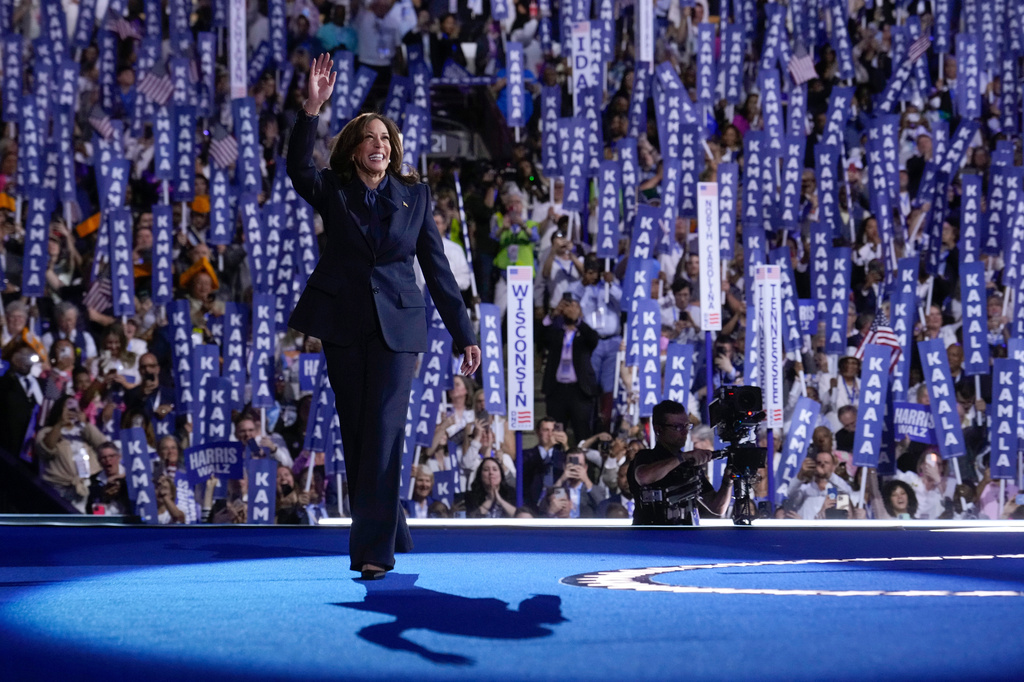
A key factor behind Trump’s return to the White House is voters’ belief that Trump would be a better steward of the U.S. economy than Harris – despite economic theory suggesting otherwise. Why, then, did Trump win on economic grounds? Economic populism. Going forward, the Democrats need to recognize that sound policy proposals are meaningless without effective messaging; in fact, they could learn a thing or two from the Trump handbook on economic communication.
By: Amish Gupta
Edited By: Noah Chun
There is an old adage in American politics: when it comes to elections, “it’s the economy, stupid.” According to a 2024 poll by YouGov, 70% of Americans believe that the economy is an important issue for them, far more than any other issue, such as immigration (44%), healthcare (44%) or crime (32%).
Rather unsurprisingly, then, improving the economy was the primary deciding factor for 40% of 2024 Trump voters in Pennsylvania, a key swing state. On the surface, this seems to at least partially explain the reason behind Harris’s loss. That is until you consider the fact that Trump’s economic plans are, to put it mildly, loony.
Consider how Trump’s policies will likely exacerbate inflation, which is cited as the most important economic issue by 68% of voters. For one, hiking tariffs will cause higher prices to be passed down to consumers. Moreover, Trump’s plan to deport millions of undocumented immigrants will likely create a massive labor shortage, putting downward pressure on supply and hence upward pressure on prices. As a result, estimates suggest that Trump’s policies will reignite inflation by between 4-7% above the baseline rate, resulting in a total inflation rate of 6-9%. Consequently, 70% of economists predict that Trump’s policies are likely to be more inflationary than those of Harris, whereas only 3% predict the opposite.
On other key economic issues, too, Trump’s economic policies are likely to do more harm than good. The aforementioned tariff plan, for instance, is expected to reduce consumption and output, and therefore lower incomes over the long run. As per estimates by Capital Economics, Trump’s plan to impose 10% tariffs on all imports and 60% tariffs on imports from China could reduce America’s real GDP by 1.5%. As for the national debt, Trump’s planned tax cuts are expected to add $7.5 trillion to the country’s already ballooning debt, far more than Harris’s plans, which are expected to add approximately $3.5 trillion.
In short, on most economic measures, Trump’s proposals are likely to fare far worse than Harris’s. In fact, a joint letter by 23 Nobel-Prize winning economists dubbed Harris’s economic proposals, which address issues such as the cost of housing, child and elder care, and the protection of American industries through industrial policies to be “vastly superior” to Trump’s. Yet, paradoxically, more voters trust Trump to handle the economy than they do Harris. How is this possible?
One explanation is that Trump getting votes on economic grounds had nothing to do with Trump at all, but rather with the dissatisfaction with the Biden-Harris administration’s handling of the economy. High inflation in the aftermath of the covid-19 pandemic gave rise to a wave of anti-incumbency, not just in the US, but all around the world. A paltry 17% of Americans believed themselves to be better off economically under Biden, whereas 53% believed themselves to be worse off. The Harris-Walz campaign, then, having inherited the legacy of the Biden-Harris administration, was bound to fail. However, this explanation, too, remains incomplete. Although inflation certainly soared under Biden in 2022, the state of the economy has since improved drastically. As annual inflation has cooled to 2.3% (a smidge away from the Fed’s target rate of 2%), the job market has remained robust with the US adding 254,000 jobs in September. Consequently, real incomes have been rising for 16 consecutive months. If Harris lost votes due to the spike in inflation in 2022, why didn’t she gain votes from the strong economic outlook now, in 2024? If anything, recency bias should mean that current economic conditions should have an outsized impact on voters’ perception of the Democrats’ economic management, canceling out, if not outweighing the 2022 inflation surge.
Although many of economists’ favorite economic indicators paint a rosy picture of the current economy, consumer sentiment remains characterized by a glumness typically observed during recessions. The problem, argues Don Leonard, a Professor at the Ohio State University, is that measures such as the Consumer Price Index have failed to accurately reflect the spending patterns of typical American households. For example, he says that the CPI assumes a typical household spends ~8% of their income on healthcare, whereas estimates by the think tank Rand Corporation suggest that average healthcare spending varies from 16% for high-income households to 34% for low-income households. This disparity is also observed in the proportion of income spent on rent, and childcare, where the CPI basket grossly underestimates household spending, resulting in a skewed inflation measure. In his analysis, after accounting for how much Americans actually spend on the aforementioned expenses, he states that wage growth has not kept pace with rising expenditures, which explains the pessimistic consumer sentiment in the face of rosy macroeconomic indicators.
In fact, according to Pippa Norris of the Harvard Kennedy School of Government, the reason Trump’s economic message resonated with swathes of Americans was precisely because he capitalized on the discontent simmering in the minds of voters, by making immigrants (in addition to the Biden administration) the scapegoat behind Americans’ economic woes, “blaming ‘Them’ for stripping prosperity, job opportunities, and public services from ‘Us’.”
Harris, meanwhile, touted the (seemingly) flourishing economy under Biden, trying to convince voters that everything was hunky-dory, even though the majority of voters clearly felt otherwise. As columnist Perry Bacon Jr. notes, by doing so, it made the “Democrats seem as if they largely support America’s status quo even though a clear majority of people say the country is heading in the wrong direction”.
Instead, Harris should’ve pulled a page out of Trump’s playbook, and employed populist messaging of her own. Instead of directing Americans’ wrath at immigrants like Trump, however, Harris should have made mega-corporations and the ultra-rich the scapegoat for American’s dissatisfaction with the economy. Not only would this connect with voters better, scapegoating billionaires would also shift voters’ ire away from the highly unpopular Biden-Harris administration (which greatly hindered support for Harris), and towards Multinational Corporations.
If targeting billionaires was the way to gain more votes, then why did the Harris campaign refrain from employing such rhetoric? Did it simply not occur to them? Of course not. Throughout the campaign, Trump characterized Harris as being a radical-left candidate, labeling her as a Marxist. Harris, in turn, attempted to assuage voters’ fears that she would be too progressive, by trying to paint herself as a moderate candidate: proudly claiming to be a gun owner, campaigning with Cheney, and so on. Naturally, in attempting to distance herself from any allegations of extremism, Harris decided to steer clear of Sanders-style rhetoric targeting the American oligarchy. However, in doing so, Harris played right into Trump’s hands.
The vast majority of voters, in fact, support progressive, populist economic policies. Even among Trump voters in Pennsylvania, for example, 87% support lowering the cost of care for children, elders and people with disabilities. Expanding Medicare, meanwhile, also garnered the support of 87% of Trump supporters. On a national level, too, all of Harris’s economic policies, from increasing the minimum wage to increasing corporate taxes, are supported by the majority of Americans, in contrast to Trump, whose proposed reduction in the corporate tax rate is opposed by a majority of Americans.
It is no wonder, then, that “Pennsylvania Independents were 18 points more enthusiastic to vote for Harris when campaigning on economic issues, and 7 points less enthusiastic to vote for Harris when campaigning with Cheney – a swing of 25 points.”
Ultimately, Harris’s decisions to (a) avoid scapegoating the oligarchy out of fear of being seen as “radical”, and (b) distance herself from overwhelmingly popular progressive economic rhetoric proved to be strategic blunders.
At the end of the day, Harris’s proposals were, objectively speaking, far more economically sound than Trump’s, and yet she lost: on the economy, at that. Beyond being a wake-up call for the Democrats, the 2024 election reveals to us that in democracies, sound economic policy proposals simply do not matter – that is, if they are not accompanied by messaging that resonates with voters. Crafting an effective economic pitch is an art that is completely independent of the strength of one’s ideas, as Trump’s win has demonstrated. Rather, effective economic pitches rely on characterizing the economy as a zero-sum game: in Trump’s case, a battle between China and the US, or between illegal immigrants and working-class Americans. In reality, the beauty of economics lies in the fact that the free market is a positive-sum game. Yet, if the goal of a campaign is to appeal to voters, it is far more effective to treat the economy as a zero-sum game than the positive-sum game it actually is, where the only path to prosperity is to “get back at China”, “snatch jobs back from immigrants” or redistribute wealth hoarded by billionaires.




 The Economics Review
Leave a comment