
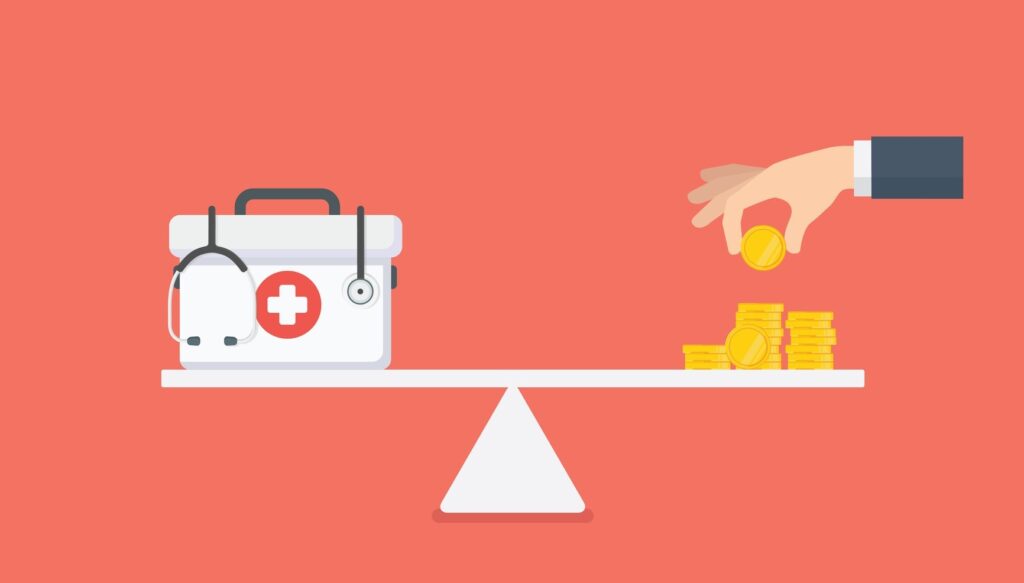
With the healthcare landscape undergoing dramatic shifts, the United States is currently experiencing an unexpected downturn in medical expenditures. The intricate interplay between economic factors, preventive measures, and societal needs necessitates a proactive and responsive stance to shape a healthcare system that aligns with the ever-changing demands of the American population.
By Swikriti “Minnie” Mandhyan
Edited by Subha Sivakumar
After a steep increase beginning in the 1990s, healthcare costs in the United States are finally exhibiting signs of stabilization. With medical expenditures presently around $2 trillion below its pre-2009 trend, they have reverted to levels close to that of 2008, following the peaks in 2020 and 2021. The decline in federal government healthcare spending related to the COVID-19 pandemic is the primary contributor to this slower growth rate. According to research by Gene Steuerle, an Institute Fellow at the Urban Institute, and Charles Roehrig, Vice President and founding director of Altarum’s Center for Sustainable Health Spending, the increase in healthcare spending has shown an exceptionally constant trend in comparison to GDP growth, suggesting a potential convergence towards a steady state, where healthcare accounts for over one-third of GDP. This convergence occurs in the backdrop of a recent pandemic and an aging population.
Even though the United States is known for having expensive healthcare, a new trend indicates that healthcare spending’s share of the GDP has been declining since before the pandemic, marking an unprecedented change in the trajectory of healthcare expenditures. The healthcare sector’s share of the economy dropped from 19.7% in 2020 to 18.3% in 2021. The recorded decrease was primarily driven by collective efforts to return to the pre-pandemic world, leading to an increase in economic growth as well as a decline in federal COVID-19 funding. However, this figure remained higher than the 17.6% recorded in 2019 and 17.7% recorded in 2016, with healthcare continuing to be a strong driver of the country’s insurmountable debt. Furthermore, in June of 2023, total costs climbed by 3% when referencing the Consumer Price Index from the previous year, but medical care prices increased by a mere 0.1%. This is abnormal since increases in health costs have historically outpaced inflation in the overall economy.

Many factors account for this new declining trend in healthcare, with the primary one being that healthcare is a superior normal good—people demand more of it as they earn more. This is a global trend that has been seen in many nations, with a strong relationship found between a country’s level of wealth and its spending on healthcare—a relationship that is present even in nations where the government handles the majority of healthcare provisions. For the United States, high healthcare spending results from greater income levels compared to most other countries.
While overall income in the U.S. might be on an upward trajectory, the median earnings of the majority of workers have taken a hit, having decreased by 2.2% between 2021 and 2022. This divergence in economic outcomes accentuates the challenges a substantial portion of the population faces. As the wealth gap widens, the ability of a significant number of individuals to afford the rising costs of healthcare has diminished. The brunt of this rising healthcare cost curve is shouldered by the other 60% of median workers, whose purchasing power has been declining. In addition to the U.S. being the only high-income country with no universal health coverage, people are increasingly opting out of insurance plans as premiums have been on a steady rise. This has resulted in a fall in the number of insured individuals, with 2021 marking the second consecutive year of decline. This decline corresponds to increased enrollment in Medicaid—government-provided health insurance—and Marketplace enrollments—a government program that allows eligible people to shop to compare, receive, and enroll in subsidized coverage. With declining wages and rising healthcare costs, the average standard of living has become unaffordable, prompting people to turn to government provisions for healthcare. The increased reliance on public health insurance stems from many people becoming eligible for public insurance, specifically Medicaid and the Children’s Health Insurance Program, due to lay-offs that affected family incomes and provisions in the Families First Coronavirus Response Act that require states to ensure continuous enrollment of half of the population. However, public healthcare is still unaffordable for a quarter of adults in the U.S. For many Americans, due to medical costs, they and their family members have avoided filling prescriptions, divided pills in half, or missed doses of medication in the past year.
On the supply side, the decline in costs is fueled by advancements in preventive medicine. The healthcare industry has undergone a cultural transformation, with a shift away from ground-breaking curative techniques and towards preventative approaches. This shift is being driven by medical professionals who increasingly recognize that preventing diseases can significantly reduce healthcare costs. The major difference between the two treatments is how preventative medicine includes measures to protect against the onset of illness, reduce or eliminate the effects of a disease, or, in the event that these goals are unattainable, postpone the progression of the disease. Aspirin, in particular, has been widely recognized for its potential to prevent heart attacks and strokes, leading to its widespread adoption as a preventative measure. The wholesale use of preventative medicine is a critical cornerstone of healthcare, as it has decreased health expenditures, hospital overcrowding, and radical treatments by increasing the quality of life and mitigating the risks of diseases.
When considering why inflation is currently outpacing healthcare costs, it is important to examine geopolitical factors that have a hand behind the former’s upward trend. High consumer demand, as well as supply chain disruptions caused by manufacturing constraints during the COVID-19 pandemic, has exacerbated inflation rates for most commodities in the consumer basket. Moreover, the ongoing Russo-Ukrainian War has pressured the global energy market even further, increasing the price of crude oil and raising energy prices for households by 20%. The contribution of non-medical services in the consumer basket has remained high due to persistent demand and workforce shortages, even if inflation has decreased in several areas, including healthcare.
While factors like declining wages, a growing number of individuals opting out of insurance plans, and the simultaneous surge in Medicaid and Marketplace enrollments contribute to the observable trend of decreasing healthcare costs, it’s important to acknowledge the dynamic nature of these variables. Current events and shifts in the global economy could introduce elements that might mitigate inflation or impact the overall U.S. GDP, potentially disrupting the current trajectory in healthcare spending. The inconsistency of the trend makes it unpredictable, but it is imperative that policymakers remain conscious of the insurmountable healthcare burden that lies on a large part of the population. Furthermore, there is a compelling array of prospective models for the U.S. government to explore, given the differences in healthcare practices across other nations. These range from single-payer systems to government-run models to hybrid structures mixing private and public alternatives that could be included in the new strategy. Recognizing the ever-evolving healthcare landscape, a responsive and proactive approach is necessary to inculcate sustainable changes in the system and alleviate the burden many Americans still face.




 The Economics Review
Leave a comment